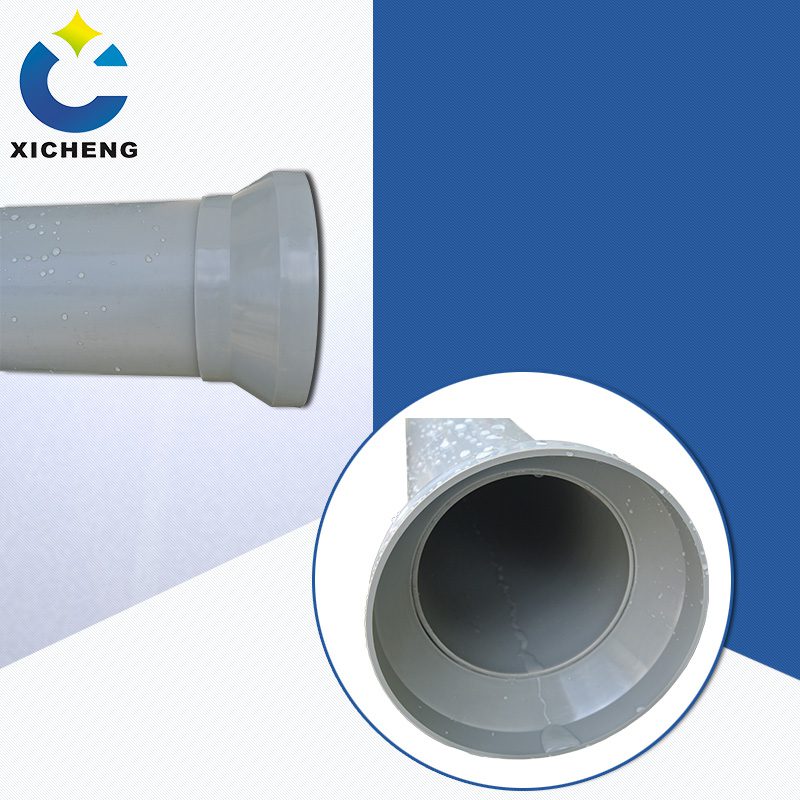
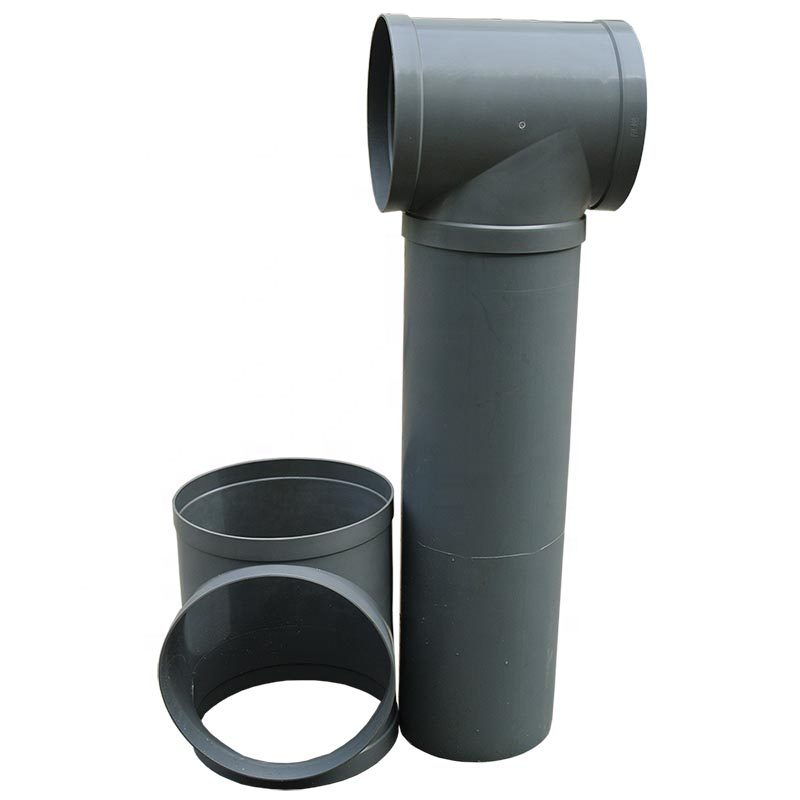
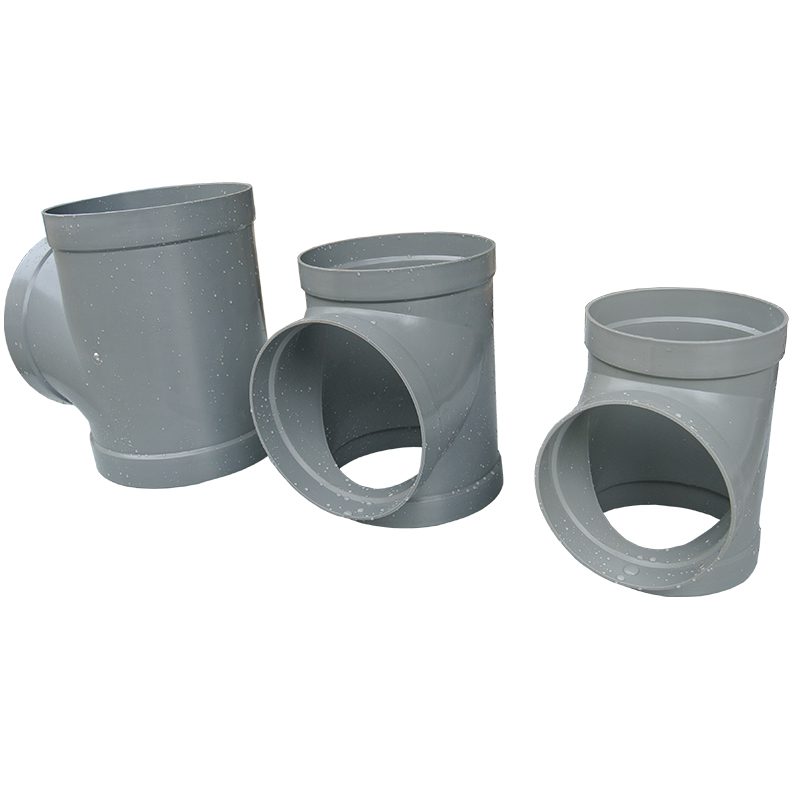
Table of Contents Toggle The Components That Complete the SystemRound Duct Fittings OverviewMaterial Selection for Fittings: Match Your DuctSizing Fittings: Don’t Oversize the Bend, Undersize the Branch The Components That Complete the System Straight duct is the backbone of a ventilation system. Fittings make it work. Elbows change direction. Tees create branches. Reducers transition sizes. Flanges provide serviceable connections. End caps terminate runs. Together, fittings typically account for 20-30% of the total duct system cost — but 80% of the pressure drop. Getting the fittings right matters more than getting the straight duct right, because each fitting multiplies the system’s flow resistance. A poorly selected elbow adds as much pressure drop as 10-20 meters of straight duct. All round air duct fittings — elbows, tees, reducers, connections, flanges, end caps — are available in PP, PVC, and PPS to match your duct material. For detailed specifications on each fitting type, see their individual product pages linked below. Round Duct Fittings Overview Fitting Type Function Product Page 45 Degree Elbow Gentle direction change — lowest pressure drop option 45 Degree Duct Elbow 90 Degree Elbow Sharp turn for tight spaces and equipment connections 90 Degree Duct Elbow Connection Elbow Flanged or socket elbow for equipment interfaces Air Duct Connection Elbow 3-Way Tee Branch connection for splitting or combining flow 3-Way Duct Tee Fitting Equal Tee Same-diameter tee for balanced distribution Equal Tee Connection Concentric Reducer Centerline-aligned diameter transition Concentric Duct Reducer Variable Diameter Fitting Non-standard equipment-to-duct transition Variable Diameter Fitting Flanges & Connections Flange kits, socket couplings, gaskets, fasteners Air Duct Connection Flanges End Caps Blind termination for duct ends — permanent or removable See Air Duct Connection Flanges Material Selection for Fittings: Match Your Duct The fundamental rule of fittings: the fitting material must match the duct material. Mixing materials creates galvanic or chemical compatibility problems at the welded or flanged joint. A PP elbow welded to a PVC duct won’t fuse properly — the materials have different melt temperatures and the weld will fail. A PPS flange bolted to a PP flange with the wrong gasket will leak when the system reaches operating temperature and the two materials expand at different rates: PP fittings with PP duct. Standard for most industrial ventilation. Chemical resistant, weld-compatible, -10 to 80degC. All standard injection-molded fittings are available in PP. PVC fittings with PVC duct. For outdoor and UV-exposed installations. Higher rigidity, lower cost. Weld-compatible only with PVC duct. PPS fittings with PPS duct. For fire-rated and high-temperature systems. Only compatible with PPS duct — cannot be welded to PP or PVC. Flanged connections with PTFE gaskets are used where a PPS section must connect to a PP or PVC section (at the temperature transition point). Sizing Fittings: Don’t Oversize the Bend, Undersize the Branch Common fitting sizing errors: Elbow diameter must match duct diameter. A DN315 elbow on a DN315 duct run. Obvious but frequently wrong on site when the specified elbow isn’t available and a different size is substituted. An undersized elbow creates a velocity increase and higher pressure drop; an oversized elbow requires transition pieces at both ends. Tee branch diameter should match the branch flow, not the main. A DN400 header with a DN150 branch drop to a fume hood is correct — the DN150 branch carries ~1,000 m3/h and the DN400 main carries ~5,000 m3/h. A DN400 equal tee with a DN400 branch carrying only 20% of the main flow wastes money on an oversized branch fitting. Reducer taper length should match the available space and flow velocity. Higher velocities need longer tapers (shallower angle) to prevent flow separation. A reducer crammed into a short space at high velocity will separate and create far more pressure drop than the straight duct it replaces. For connection components — flanges, gaskets, fasteners, socket couplings, and end caps — see our Air Duct Connections & Flanges and Plastic Air Duct Connections pages. Send your fitting schedule to [email protected]. We’ll verify sizing, material compatibility, and provide a complete quotation. WhatsApp: 86 18927456906.
Related products
-3%